The Quiet Upside: How Japanese Buyers Can Unlock the Hidden Equity in American Starter Homes
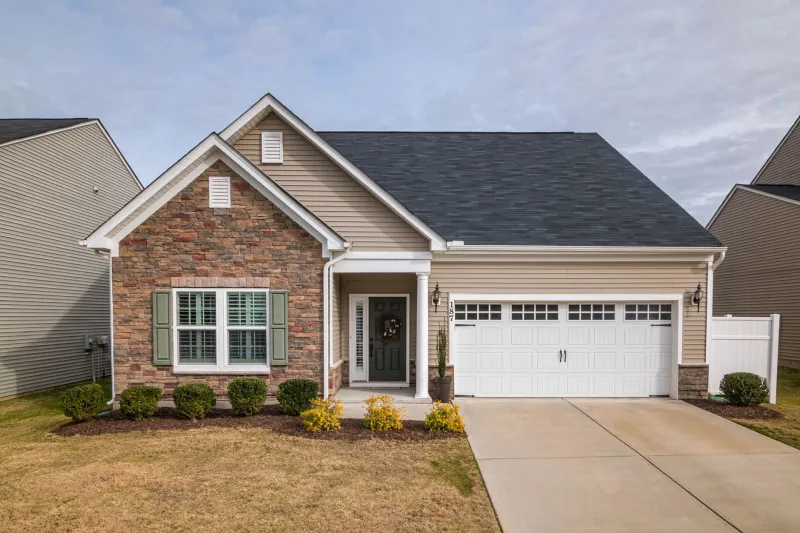
For many Japanese professionals relocating to the United States, homeownership begins as a practical calculation. The question is rarely which property will grow in value—it is more often which property will serve us adequately until we return home. This is an understandable instinct, shaped by decades of watching Japanese real estate depreciate steadily after purchase. But that same instinct, when applied without adjustment to the American market, can lead buyers to undervalue one of the most quietly powerful investment vehicles available to them: the American starter home.
The difference is not simply one of price point. It is a difference in how markets behave, how neighborhoods evolve, and how time interacts with property value on this side of the Pacific.
Why Japanese Buyers Bring a Different Mental Model
In Japan, a newly constructed home begins losing value almost immediately. The building itself—rather than the land—is treated as a depreciating asset, and the cultural emphasis on new construction means that older homes carry a stigma that rarely reverses. Many Japanese homeowners have internalized this reality so thoroughly that the concept of a home appreciating over time feels abstract, even implausible.
American real estate operates under a substantially different logic. Existing homes in desirable or transitioning neighborhoods frequently gain value not despite their age, but because of what surrounds them: infrastructure investment, demographic shifts, school district improvements, and the compounding effect of neighborhood desirability. The land beneath the structure carries weight here in ways that differ markedly from Japanese market conventions.
When Japanese buyers arrive in the United States carrying their domestic assumptions, they often focus on newer construction or established communities—choices that feel safe and legible. Starter homes in less polished neighborhoods tend to be dismissed as inconvenient compromises. What they overlook is that these properties frequently sit at the beginning of an appreciation curve, not at its end.
What Makes a Starter Home a Strategic Asset
The term "starter home" in the American market typically refers to a modestly sized, lower-priced property—often a two- or three-bedroom single-family home or townhouse—positioned at the accessible end of a local market. These homes attract first-time buyers, younger families, and investors precisely because they carry lower entry costs. But their strategic value extends well beyond affordability.
Starter homes in emerging neighborhoods often benefit from what real estate professionals call neighborhood trajectory: the directional movement of a community over time. Signs of positive trajectory include new local businesses opening, infrastructure improvements such as transit expansion or road upgrades, rising permit applications for renovations, and an influx of younger buyers willing to invest in the area. None of these signals are guaranteed, but together they paint a picture of momentum.
For a Japanese buyer with a five- to seven-year horizon—a common window for corporate expats—purchasing a starter home in a neighborhood showing early signs of this trajectory can yield equity gains that substantially exceed what a comparable investment in a more established area would produce. The math is not complicated: buying at the beginning of appreciation is simply more profitable than buying near its peak.
Timing Psychology and the Expat Mindset
One of the subtler challenges for Japanese buyers is the psychological relationship with time. A corporate assignment of three to five years can make any purchase feel provisional—a placeholder rather than a commitment. This framing naturally pushes buyers toward properties that feel complete and finished, because incomplete or transitional spaces feel mismatched with a temporary stay.
But this logic contains a hidden cost. A finished, established property in a mature neighborhood offers stability and predictability, yet it also offers limited upside. The appreciation that might occur over five years in such a neighborhood is modest compared to what the same period can produce in a neighborhood that is actively transforming.
Reframing the timeline is essential. Five years in an American real estate context is not a brief interlude—it is a meaningful holding period. Markets that were overlooked in 2019 looked dramatically different by 2024. Buyers who purchased starter homes in neighborhoods that were then considered secondary have, in many cases, built six-figure equity positions without making a single structural improvement to their property.
How to Identify Undervalued Properties With Genuine Potential
Recognizing a starter home with real appreciation potential requires looking beyond the property itself and examining the environment in which it sits. Several indicators are worth investigating carefully.
Proximity to development corridors. When a city or municipality is investing in transit, mixed-use development, or commercial revitalization along a particular corridor, the residential properties nearby often benefit within a three-to-seven-year window. Local planning commission records and city council agendas—often publicly available online—can reveal where investment is flowing before it becomes visible on the street.
School district trends. In the United States, school district quality has an outsized effect on residential property values. A district that is improving its ratings, introducing new programs, or attracting additional funding can drive meaningful demand into its surrounding neighborhoods. Tracking district performance over several years, rather than relying on a single snapshot, gives a more accurate picture of trajectory.
Days on market and inventory patterns. In neighborhoods gaining momentum, properties tend to sell faster and inventory tightens. Monitoring these metrics over six to twelve months can reveal demand patterns that are not yet reflected in asking prices—a window of opportunity for buyers who act with some deliberateness.
Renovation activity. A neighborhood where homeowners are visibly investing in their properties—new roofs, landscaping improvements, exterior repaints—signals a community that believes in its own future. This collective confidence tends to be self-reinforcing.
The Equity Conversation Most Buyers Avoid
There is a practical dimension to starter home equity that deserves direct acknowledgment: when the time comes to leave the United States, a home that has appreciated meaningfully becomes a genuine financial event. Depending on how the property is handled—sold, retained as a rental, or transferred—the equity accumulated can fund a down payment on a future property, supplement savings, or provide a buffer during a career transition.
Japanese buyers who treat their American home purely as a housing expense miss this dimension entirely. Those who treat it as a managed asset—chosen with some care for its appreciation potential, maintained attentively, and sold or positioned strategically at the right moment—often find that their time in the United States left them materially better positioned than when they arrived.
At 安心住まい | Anshin Sumai, we believe that finding your place in America means more than locating a comfortable address. It means understanding the financial landscape well enough to let your home work on your behalf—quietly, steadily, and in ways that endure long after you have moved on.