Unlearning Small: How Japanese Buyers Can Reframe American Home Scale Without Losing Themselves

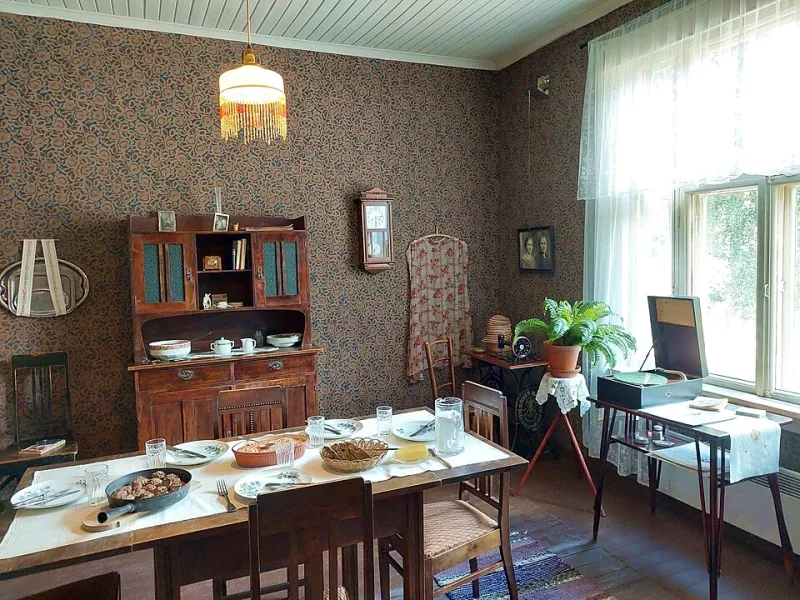
Photo: Anıl Öztaş, CC BY-SA 4.0, via Wikimedia Commons
There is a particular kind of disorientation that strikes many Japanese house-hunters when they first walk through an American suburban home. The rooms are vast. The closets are the size of Tokyo studio apartments. The garage — a separate, cavernous structure — could comfortably house a small office. And yet, somehow, the listing agent is describing the property as "cozy" and "efficiently laid out."
For buyers raised in a housing culture where spatial restraint is not a limitation but an aesthetic virtue, the American residential landscape can feel genuinely foreign. Not unwelcoming, exactly — but operating by a different logic entirely.
This is not merely a matter of preference. It is a collision of deeply internalized values about what a home is for.
The Philosophy Behind Japanese Spatial Expectations
Japanese residential design has long been shaped by necessity and refined into philosophy. In cities like Tokyo and Osaka, where land is scarce and population density is extreme, compact living is not a compromise — it is an art form. Rooms serve multiple purposes. Furniture folds away. Seasonal items rotate in and out of storage. The home breathes differently depending on what is needed from it at any given moment.
Underpinning this is a broader cultural orientation toward ma — the concept of meaningful negative space. A room that is not filled is not empty; it is available. It holds potential. The absence of objects is itself a form of presence.
American residential culture operates from nearly the opposite premise. Space is abundance. A large home signals success. Walk-in closets, formal dining rooms, bonus rooms, and three-car garages are not excesses — they are aspirational benchmarks. And the American consumer economy is well-designed to fill every square foot of that space with furniture, appliances, seasonal decorations, and accumulated belongings.
When a Japanese buyer steps into this environment, the mismatch is not trivial. It touches on identity.
Where Minimalism Genuinely Fails in American Real Estate
Let us be honest about something that is rarely said directly: a strict Japanese minimalist aesthetic, transplanted wholesale into an American suburban home, often looks and feels wrong — not because the values behind it are wrong, but because the architectural context does not support it.
A 2,400-square-foot Colonial in New Jersey was not designed to hold three pieces of furniture and a single hanging scroll. Its proportions assume a certain density of furnishing. Rooms with high ceilings and wide windows look unfinished, even unsettling, when left largely bare. American homes have visual weight built into their dimensions, and that weight needs to be balanced.
Furthermore, American social norms around hosting, holiday decorating, and domestic presentation create quiet but persistent pressure. Neighbors notice. Guests comment. Children bring home expectations formed by the homes of their American classmates. The minimalist household that functions beautifully for a Japanese couple can feel stark and unwelcoming when American family life begins to flow through it.
This is not a reason to abandon your values. It is a reason to apply them more selectively and strategically.
What Actually Works: Selective Density and Intentional Accumulation
The most successful Japanese buyers in the American market tend to make peace with the scale of their new homes by practicing what might be called selective density — choosing a smaller number of rooms or zones to inhabit with intention, while allowing other areas to remain more conventionally American.
In practical terms, this might mean creating one room — a study, a tea room, a reading corner — that is furnished and maintained according to Japanese principles, while the living room and dining room follow American spatial conventions more closely. The home as a whole does not need to be a manifesto. It needs to function for the life you are actually living.
Storage, too, requires a revised approach. American homes offer storage in quantities that can feel almost absurd to a Japanese buyer accustomed to rotating possessions seasonally. Rather than resisting this, consider using it as infrastructure for a more deliberate relationship with your belongings. Seasonal rotation — a deeply Japanese practice — becomes easier in an American home, not harder, once you stop viewing the extra closets as an invitation to accumulate and start treating them as a rotation system.
Navigating the Suburban Pressure to Fill
Perhaps the greatest challenge for Japanese homeowners in American suburbs is the social dimension of accumulation. Suburban American life is organized, in many subtle ways, around the acquisition and display of domestic goods. Big-box stores, neighborhood garage sales, and the unspoken language of curb appeal all nudge residents toward filling their homes with more.
Resisting this requires not rigidity, but clarity of purpose. Before purchasing a home, it is worth identifying which American domestic conventions you are willing to adopt — a full set of outdoor furniture, a holiday wreath, a well-stocked garage workshop — and which you genuinely do not need. This is not about cultural superiority. It is about making conscious choices rather than drifting into accumulation by default.
Some Japanese families find it helpful to establish explicit household rules about what enters the home: one item in, one item out. Others designate a specific area — a mudroom, a utility room — as the household's "American zone," where practical American abundance is permitted without apology, while the rest of the home maintains a quieter register.
Choosing the Right Property to Begin With
Not all American homes are equally difficult to inhabit with Japanese sensibilities. Older craftsman bungalows, mid-century modern ranch homes, and certain contemporary builds tend to have proportions and architectural details that align more naturally with minimalist furnishing. Vaulted great rooms and McMansion floor plans, by contrast, demand a level of furnishing that can feel at odds with restraint.
When evaluating properties, pay attention to ceiling heights, room transitions, and the relationship between indoor and outdoor space. A home with strong indoor-outdoor flow — generous windows, a well-placed garden, access to natural light — will feel less cavernous even when modestly furnished. These are qualities worth prioritizing, even if they require compromising on square footage or location.
At 安心住まい, we recognize that finding your place in America is not simply a matter of finding the right address. It is finding a home that can hold the life you intend to live — including the values you carried across the Pacific. That alignment is worth searching for carefully.